The UNESCO Chair Participates in the Red Española de ACV Conference
01/12/2025
1 min reading time
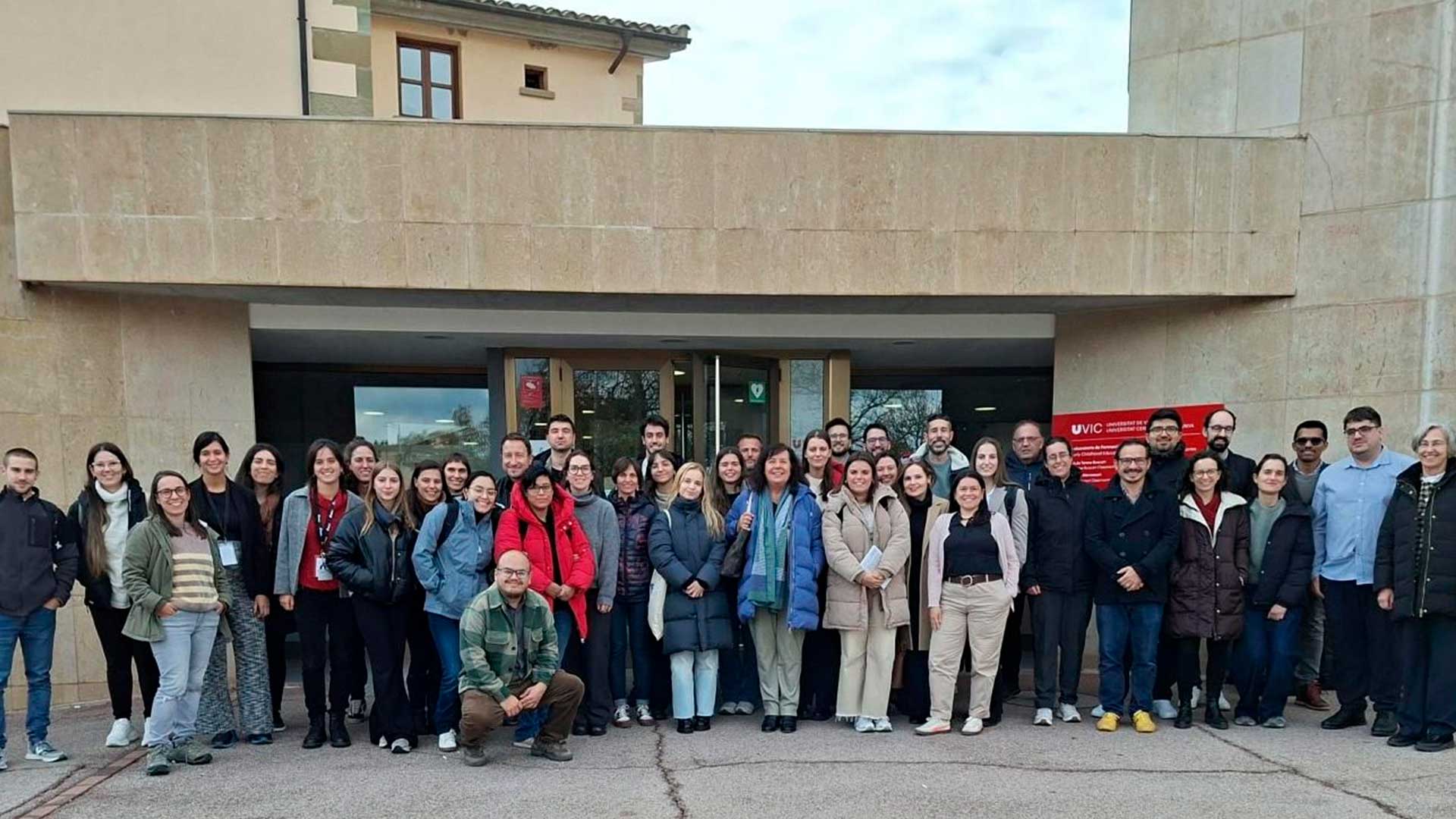
Group photo of the attendees at the Red Española de ACV event held in Vic. / Photo: Red Española de ACV
The event “Life Cycle Management in the Transition Toward a Sustainable Agri-Food Sector”, promoted by the Spanish Life Cycle Assessment Network (Red Española de ACV), was held in Vic (Barcelona) on 19 and 20 November 2025.
The conference was organised by the Red Española de ACV, with the collaboration of the BETA Technological Center, AZTI, and the University of Cantabria. This event formed part of the Annual Meeting of the Spanish LCA Network.
Participants were invited to present on the methodological advances, decision-making support related to regulatory frameworks, eco-labelling, communication, and successful case studies during the second session.
Dr Alba Bala, Executive Director, and Dr Sahar Azarkamand, researcher at the UNESCO Chair in Life Cycle and Climate Change at ESCI-UPF, took part in the event. Dr Sahar Azarkamand presented the results of the ECOtwins project, showcasing its contributions to promoting sustainability and life cycle-based approaches within the agri-food sector.
The ECOtwins partnership has received funding from the European Union’s “HORIZON-WIDERA-2021-ACCESS-03” research and innovation program under the 101079308 grant agreement.
After nearly three years of collaboration, the project has assessed the potential of combining recycled plastics and banana plant waste to develop more sustainable materials, incorporating environmental and social criteria through life cycle assessment.
From April 21 to 23, Sandra Ceballos Santos, researcher at the UNESCO Chair in Life Cycle and Climate Change at ESCI-UPF, participated in the 1st Iberian Congress on Small-Scale Fisheries (Congreso Ibérico de Pesquerías Artesanales – CIPA 2026), held at the Paraninfo of the Palacio de la Magdalena in Santander, Cantabria.
ESCI-UPF and Politecnico di Milano publish a joint research paper to help organisations and consumers, respectively, with policy and decision-making through the assessment of the social risks associated with different high-protein food alternatives.





Leave a message