Arranca el proyecto REBOCOLLECT
08/07/2026
La iniciativa de REBOCOLLECT da continuidad a REBO2VINO, diseñando y optimizando un posible modelo colectivo de reutilización de botellas, y su relación e impacto sobre el sistema actual de reciclado.

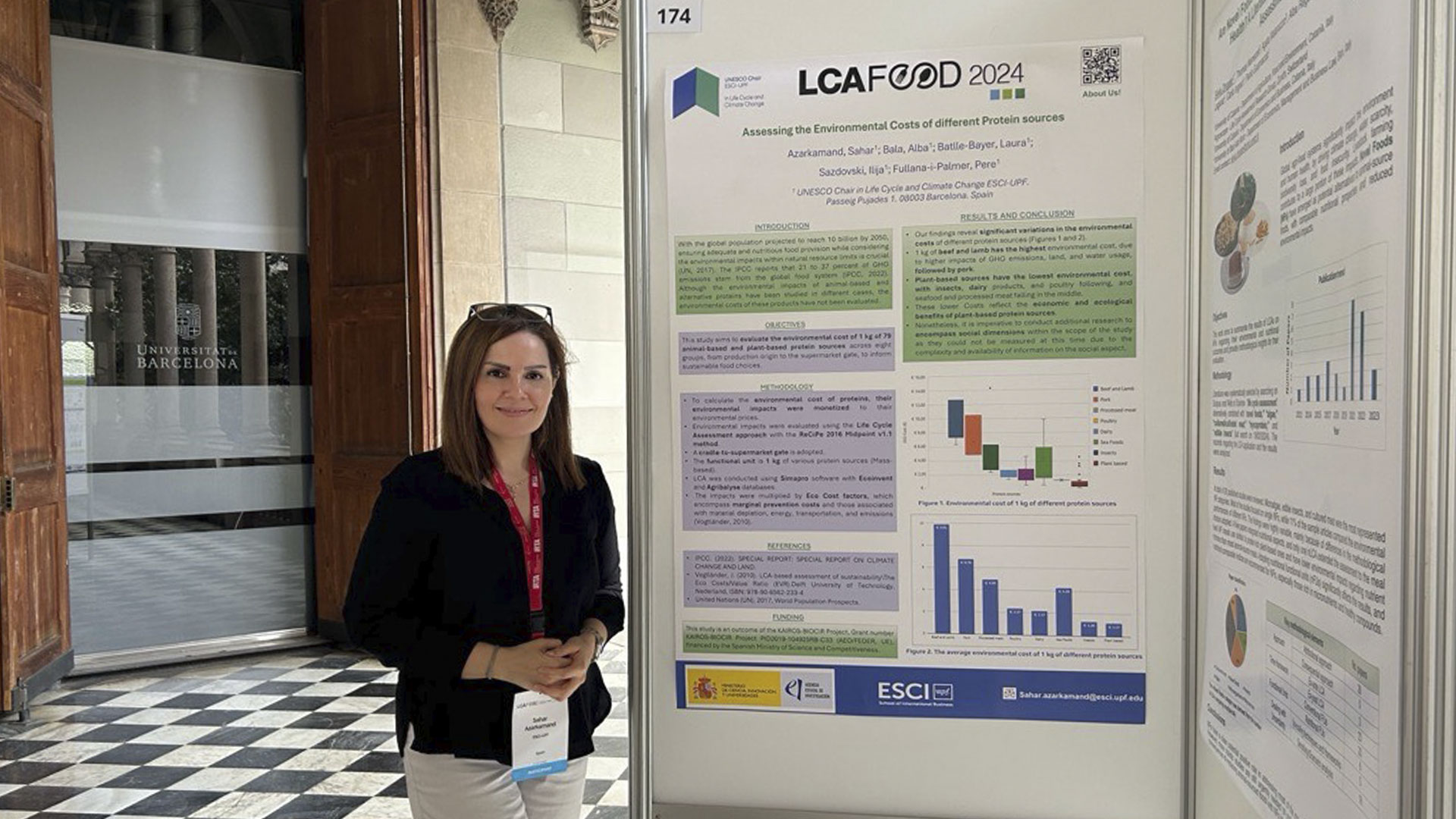
Sahar Azarkamand, researcher at the UNESCO Chair in Life Cycle and Climate Change at ESCI-UPF, shares the outcomes of the projects she presented at the 14th LCAFood 2024 International Conference, which was celebrated last week in Barcelona.
At the 14th LCAFood 2024 International Conference, the world’s leading forum on sustainable food, I had the opportunity to present two posters showcasing the outcomes of two distinct projects in which the UNESCO Chair in Life Cycle and Climate Change at ESCI-UPF participates. The conference provided an exceptional platform for further discussions on sustainability and innovation in the food and wine industries.
Project 1: Wine Packaging and Environmental Impact in Spain
Spain, the world’s leading vineyard, accounts for 13% of global wine production. However, the environmental impact of wine packaging is significant, contributing to 30-40% of the wine industry’s climate change footprint (PEFCR, 2020). In response to this, the EU Directive (EU) 2018/852 emphasizes reuse as a key strategy for enhancing resource efficiency and reducing environmental impact. Spain is adopting this directive by promoting the reuse of glass packaging in the wine sector.
Our research aimed to provide Spanish wineries with a tool to compare the environmental performance of reusable glass bottles versus single-use ones. The REBO2VINO project is currently running pilot tests at MIGUEL TORRES and BODEGA GONZÁLEZ BYASS JEREZ, S.L.U. (BGBJ) wineries, focusing on the introduction of reusable glass packaging into wine production and distribution via the HORECA channel.
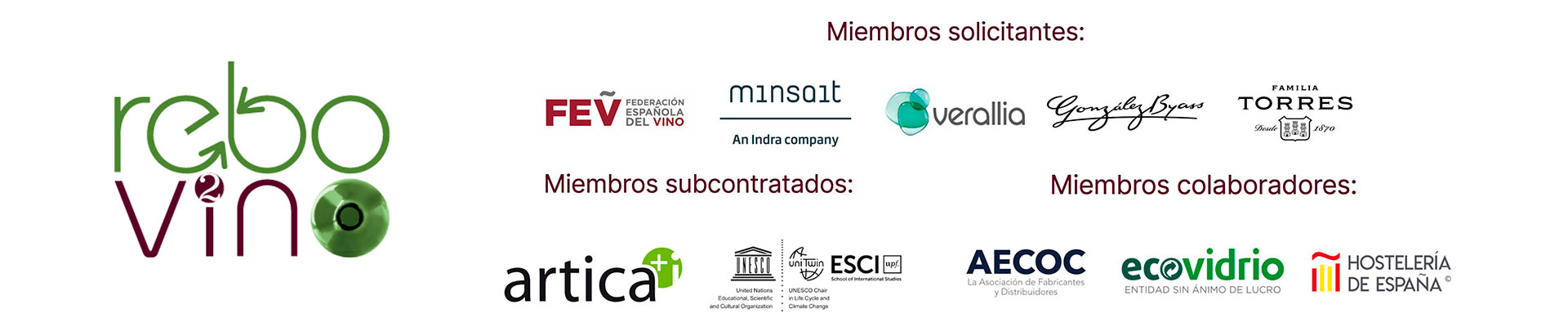
Key partners in this initiative include:
FEV (Spanish Federation of Winemakers)
Verallia, a global leader in glass container manufacturing
Indra (Minsait), a top IT company in Spain and Europe
UNESCO Chair in Life Cycle and Climate Change at ESCI-UPF
Project 2: Environmental Cost of Animal and Plant-Based Proteins
With the global population projected to reach 10 billion by 2050, ensuring both adequate and nutritious food within natural resource limits is critical (UN, 2017). The IPCC reports that 21-37% of global greenhouse gas (GHG) emissions come from the food system (IPCC, 2022). While many studies have explored the environmental impacts of animal-based and alternative proteins, a comprehensive evaluation of their environmental costs has been lacking.
Our study fills this gap by analyzing the environmental cost of 1 kg of 79 animal- and plant-based protein sources, across eight different groups, from production to the supermarket shelf. This research aims to guide more sustainable food choices by comparing the environmental impact of various protein sources.
The project is conducted under the supervision of Dr Alba Bala and Dr Pere Fullana, with the collaboration of Dr Laura Batlle and Ilija Sazdovski.

08/07/2026
La iniciativa de REBOCOLLECT da continuidad a REBO2VINO, diseñando y optimizando un posible modelo colectivo de reutilización de botellas, y su relación e impacto sobre el sistema actual de reciclado.

01/07/2026
From June 4 to 5, Sandra Ceballos-Santos, researcher at the UNESCO Chair in Life Cycle and Climate Change (ESCI-UPF), participated in the World Symposium on Sustainability Governance (WSSG), held at the University of Salamanca.

09/06/2026
From May 17 to 21, Sandra Ceballos-Santos, researcher at the UNESCO Chair in Life Cycle and Climate Change (ESCI-UPF), participated in the SETAC Europe 36th Annual Meeting held in Maastricht, The Netherlands.
Leave a message