The CICEP Project Concludes with New Circular Solutions for Waste Valorisation in Insular Regions
21/05/2026
1 min reading time
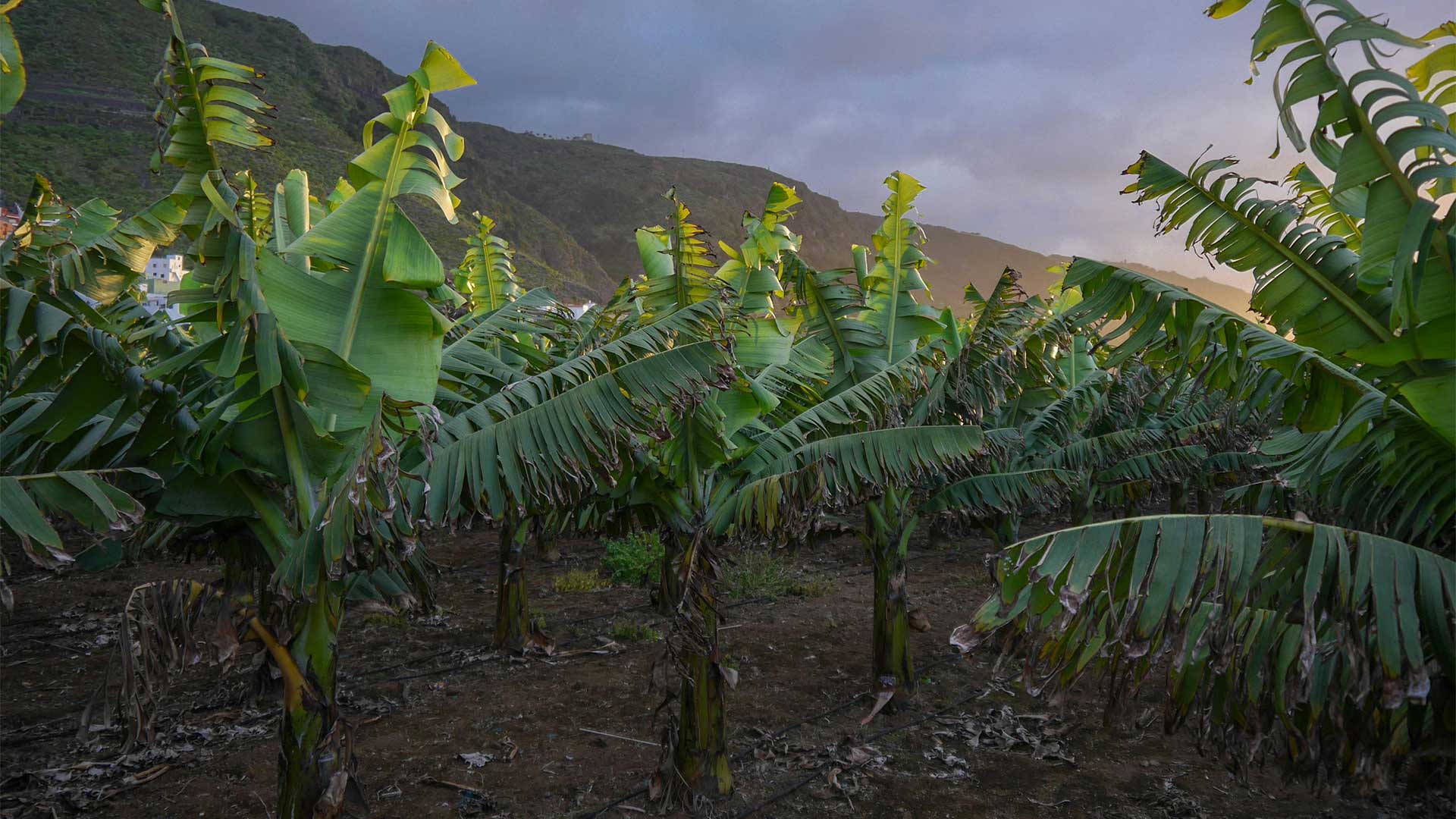
Banana plantation at Santa Cruz de Tenerife (Canary Islands, Spain). / Photo: Pexels (Ronny Siegel)
After nearly three years of collaboration, the project has assessed the potential of combining recycled plastics and banana plant waste to develop more sustainable materials, incorporating environmental and social criteria through life cycle assessment.
Funded by the Spanish Ministry of Science and Innovation within the framework of the Recovery, Transformation and Resilience Plan, the project addressed waste management challenges in the Canary Islands through circular economy strategies focused on the recovery of post-consumer mixed plastics and the valorisation of agricultural banana rachis waste.
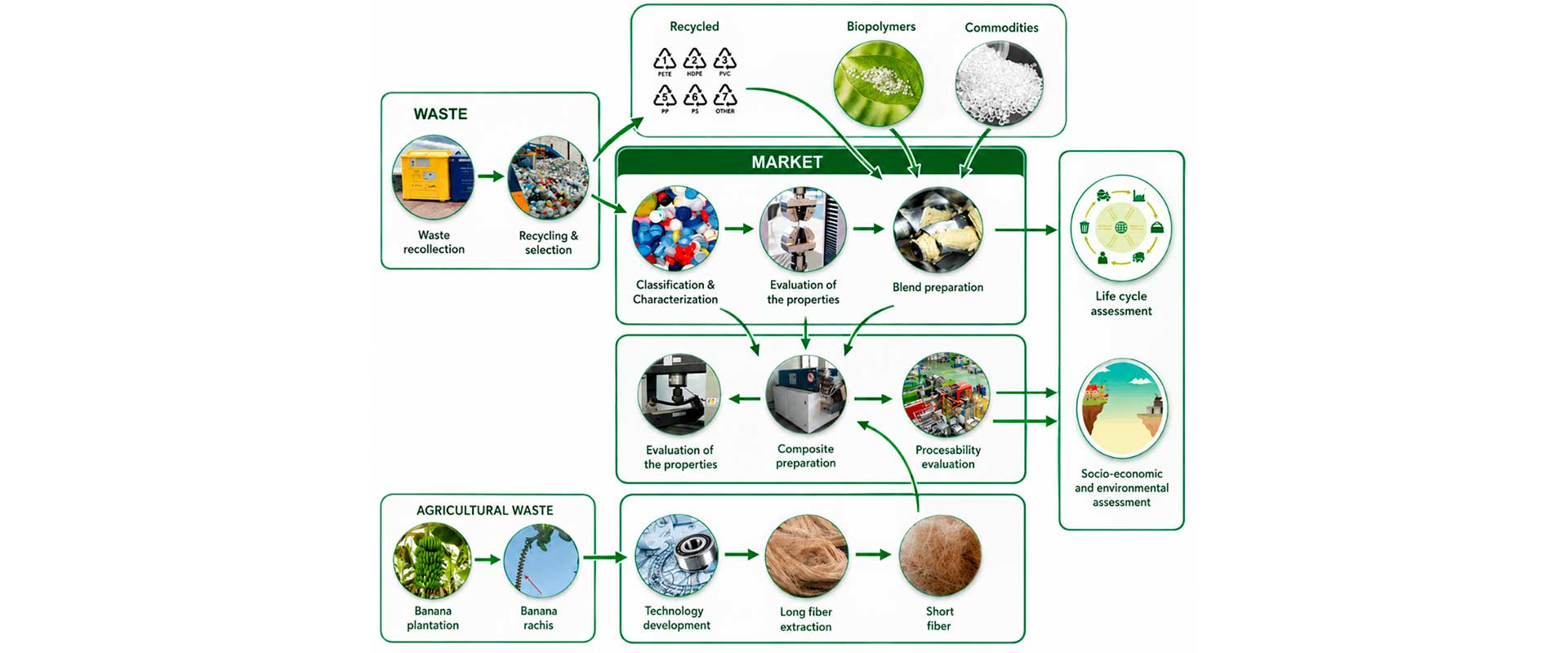
The project analysed how recycled plastics and natural fibres obtained from banana plant waste can be combined to develop more sustainable composite materials with potential industrial applications (Figure 1).
Figure 1. Process integrating plastic recycling and banana plant waste valorisation to improve environmental sustainability.
At ESCI-UPF, the UNESCO Chair in Life Cycle and Climate Change participated in the environmental and social assessment of the proposed solutions through methodologies such as Life Cycle Assessment (LCA) and Social Life Cycle Assessment (S-LCA). These methodologies make it possible to analyse the impacts of a product or process throughout its different stages, from raw material extraction to its use or end-of-life.
The studies carried out identified critical environmental hotspots related to water and energy consumption and proposed improvement strategies such as water recirculation, energy optimisation, and the use of renewable energy sources.
The project results highlight the potential for developing circular economy strategies adapted to insular regions, contributing to more sustainable and resilient waste management models.
This publication is part of the R&D&I project TED2021-131039B-C33, funded by MCIN/AEI/10.13039/501100011033 and the European Union NextGenerationEU/PRTR.
The UNESCO Chair in Life Cycle and Climate Change at ESCI-UPF has received a special mention at the 5th edition of the Sanidad #PorElClima Awards, organised by ECODES.
Un recent estudi revela que distribuir la medicació ambulatòria de dispensació hospitalària a través de les farmàcies comunitàries redueix gairebé el 50% en les emissions de CO₂, un dels principals gasos d’efecte d’hivernacle, que produeixen els pacients en els seus desplaçaments per recollir-la.
Over two consecutive weeks, the UNESCO Chair in Life Cycle and Climate Change at ESCI-UPF contributed to the 3rd edition of the ESCI-UPF Summer School, delivering 45 hours of sustainability-focused education to nearly 200 international students from universities around the world.



Leave a message