A new study led by the UNESCO Chair in Life Cycle and Climate Change at ESCI-UPF analyses how biofertilizers, biostimulants, organic amendments, and intercropping systems can reduce the environmental impact of agriculture while maintaining crop productivity in Denmark and Ukraine.
The UNESCO Chair at ESCI-UPF has led a scientific article on a research study by the ECOtwins research consortium, published in the American Chemical Society’s Agricultural Science & Technology journal, exploring how biofertilizers, biostimulants, and organic amendments can support sustainable agriculture. Based on field trials in Denmark and Ukraine, the study demonstrates that intercropping systems and organic-based inputs can significantly reduce environmental impacts while maintaining crop productivity.
In a global context characterised by geopolitical instability and vulnerable supply chains, including recent tensions affecting key energy transport routes such as the Strait of Hormuz, concerns over fertiliser shortages have increased significantly, posing growing risks to global food security (FAO, 2026).
Disruptions in energy and fertiliser markets can significantly affect agricultural productivity, particularly in import-dependent countries, highlighting the urgent need for locally produced and sustainable agricultural inputs. In this regard, organic-based agricultural inputs offer promising pathways to promote sustainable agriculture, enhance food security, reduce greenhouse gas emissions, and support long-term environmental sustainability. The biofertilizers, biostimulants, and organic amendments play a key role in improving agricultural self-sufficiency while reducing dependence on resource-intensive inputs.
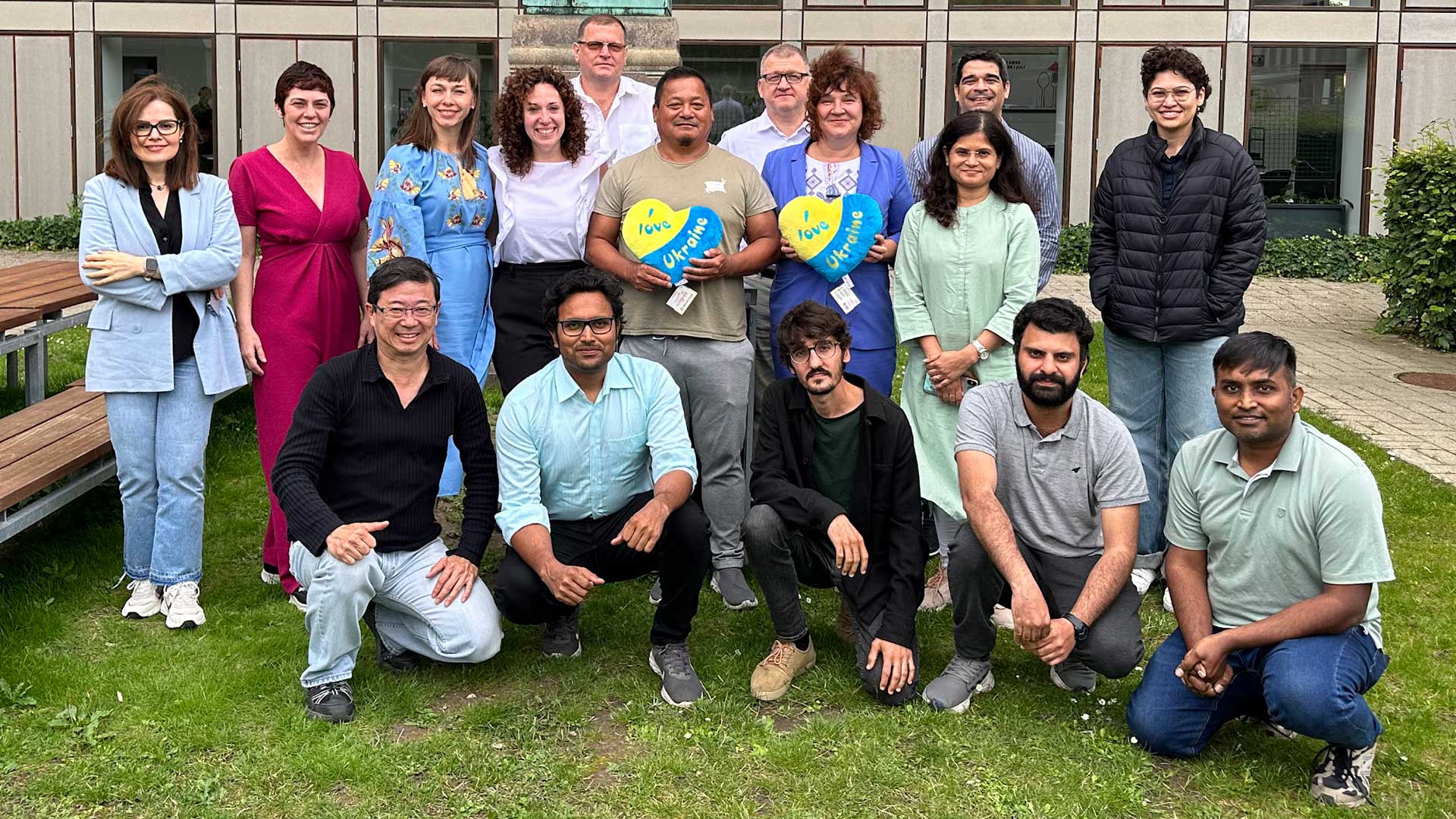
In this regard, the ECOtwins research partnership has published a new scientific paper in the American Chemical Society’s Agricultural Science & Technology journal. The study was carried out by researchers at the UNESCO Chair in Life Cycle and Climate Change ESCI-UPF, in collaboration with the National University of Environmental Sciences of Ukraine (NUBiP), the University of Copenhagen (UCPH), the Swedish University of Agricultural Sciences (SLU) and Forel company.
This study evaluates the environmental impacts and environmental costs associated with the application of composts (low-biology compost, high-biology compost, vermicompost), biofertilizers (insect frass and biochar) and biostimulants (compost tea and fish hydrolysate) produced in Denmark, Sweden, and Ukraine. The assessment is based on field trials conducted in Denmark and Ukraine across five cropping systems: pea sole, barley sole, pea–barley intercrop, barley conventional, and a control scenario without application. The study applies Life Cycle Assessment (LCA) combined with environmental cost (eco-cost) methodologies. The functional unit is defined as 1 kg of crop production, and system boundaries follow a cradle-to-grave approach.
The results reveal significant differences among the evaluated products and cropping systems. In Denmark, insect frass contributed to reducing land and water use, while fish hydrolysate demonstrated the lowest overall environmental impacts across most categories. In Ukraine, biochar demonstrated substantial environmental benefits, particularly by reducing acidification, land use, water consumption, and fossil resource use.
Across both countries, intercropping systems (pea–barley) consistently exhibited lower environmental impacts compared to monocropping systems. Furthermore, Ukraine presented a lower overall environmental impact and lower environmental costs, mainly due to reduced input requirements and shorter transportation distances.
Overall, the study demonstrates that sustainable agricultural transitions require integrated approaches that simultaneously address productivity, environmental performance, and resource efficiency. The findings confirm that biostimulants and organic amendments, when combined with suitable cropping systems such as intercropping, can significantly reduce environmental burdens while maintaining or improving crop yields. Beyond Denmark and Ukraine, these insights provide valuable guidance for advancing climate-resilient and low-input agricultural systems under diverse regional conditions.
As global agriculture faces increasing pressure from climate change, resource scarcity, and geopolitical uncertainty, the implementation of locally adapted and environmentally efficient farming practices will become increasingly essential to ensure long-term food security and sustainability.
The team would like to honour the memory of Professor Vitalii Kovalenko and acknowledge the Ukrainian authors for their continued dedication and high-quality work under conditions of war, while expressing hope for a peaceful resolution in the near future.




Leave a message